4 extra-legal benefits to activate before the back-to-work season in Luxembourg

The September back-to-work period is often the time when HR teams reassess their priorities: recruitment, retention, employee satisfaction. In a Luxembourg job market as competitive as this one, standing out as an employer is no longer just about gross salary. Extra-legal benefits have become an essential strategic lever, and some can be activated quickly — even before the end of summer. Here are four concrete benefits to implement right now.
Whether you are an HR manager, Chief HR Officer, or director of a Luxembourg SME, this article will give you data-driven arguments and action points to enhance your overall compensation policy before the new season.
Why is the back-to-work season the right time to review extra-legal benefits?
The back-to-work period is a pivotal moment in the employee life cycle. It is when resignation intentions take shape, when comparisons with other job offers intensify, and when engagement can waver after the summer break. For Luxembourg employers, this makes it a prime window for action.
According to the Pluxee study “The New Rules of Employee Engagement”, benefits are the 2nd employer attractiveness criterion for 36% of employees, ahead of growth opportunities and just behind salary. In Luxembourg, where the war for talent is particularly fierce in the financial, logistics and technology sectors, offering an attractive benefits package can make the difference between retaining a key talent or watching them leave for a competitor.
Good news: some extra-legal benefits can be activated quickly, without heavy salary restructuring, and offer an excellent cost/impact ratio for employers. Here are the four we recommend prioritising.
Lever 1: The 13th month bonus: a strong signal on compensation
What it is
The 13th month bonus is an annual premium equivalent to an additional month of gross salary, paid in one or several instalments depending on company policy. It is not required by Luxembourg law, but it is widely used in collective agreements and in the practices of companies in the financial, industrial and service sectors. Its implementation is a matter of agreement between employer and employees, formalised in the employment contract or via an internal policy document.
Why it works before the back-to-work season
Announcing a 13th month bonus at the start of the new season, or clarifying the eligibility conditions, is a powerful retention lever. It is a concrete financial commitment that gives employees a reason to stay through year-end and sends a clear signal recognising their contribution. In a context where purchasing power is under pressure, this benefit is perceived as particularly tangible.
Key advantages for the employer:
- Highly effective retention lever: creates a financial horizon at year-end
- Strong argument in job offers
- Strengthens the perception of fairness and recognition within teams
Point of attention
Once granted, the 13th month bonus can become an established practice that is difficult to reverse. Make sure to formalise the eligibility conditions (minimum seniority, pro-rating for mid-year joiners, any link to performance) in order to retain flexibility while giving your teams clear visibility.
Lever 2: Meal vouchers: a tried-and-tested classic for daily purchasing power
What it is
A meal voucher is a payment instrument granted by the employer to cover food expenses. In Luxembourg, meal vouchers benefit from a favourable tax and social security regime: since 1 January 2024, the cap exempt from income tax and social contributions is set at €15 per working day worked, on the condition that the employee contributes €2.80 and the employer €12.20.
Why it works before the back-to-work season
In a context of persistent inflation (food prices in Luxembourg have risen by more than 24% between 2021 and 2026 according to STATEC), meal vouchers represent a concrete and immediate boost to employees’ daily purchasing power. They are one of the most visible and most appreciated benefits in daily life, with an impact felt at every lunch break.
Key advantages for the employer:
- Quick to implement via a digital solution (physical or virtual card)
- Net cost for the employer lower than the equivalent gross salary, thanks to exemptions
- Direct and daily impact on employee satisfaction
- Easy to highlight in job offers and internal communications
Pluxee’s recommendation
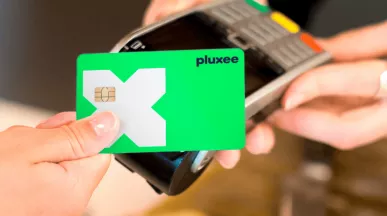
With the Pluxee Lunch solution, your employees benefit from a payment card accepted across a broad network of nearly 2,500 restaurants, bakeries and supermarkets in Luxembourg. Activation is simple, management is entirely digital, and the impact is immediate from the very first use.
Lever 3: Gift vouchers: to mark the moments that matter
What it is
A gift voucher is a value token offered by the employer on specific occasions: end-of-year celebrations, birth, marriage, back-to-work season, work anniversary… In Luxembourg, these instruments benefit from favourable tax treatment when granted in connection with defined events, within the limits set by the Administration des contributions directes.
Why it works before the back-to-work season
The back-to-work and back-to-school season often coincides with significant expenses for families (school supplies, extracurricular activities, equipment). Offering a gift card at this time is a meaningful gesture that demonstrates the company is mindful of its employees’ financial reality. It is also an excellent non-monetary recognition tool, complementing fixed salary and the 13th month bonus.
Key advantages for the employer:
- Powerful and easily personalised recognition lever
- Favourable tax treatment within legal limits
- Can be deployed quickly, even for large teams
- Strengthens the sense of belonging and company culture
Pluxee’s recommendation
With Pluxee Gift, you distribute digital gift vouchers accepted across a wide network of more than 600 points of sale at more than 250 partner retailers in Luxembourg and online. The management platform lets you set amounts per employee and manage orders in just a few clicks — ideal for activation before the back-to-work season.
Lever 4: Supplementary health insurance: the premium safety net
What it is
Supplementary health insurance is health coverage partly or fully funded by the employer, which complements the reimbursements from the Caisse Nationale de Santé (CNS). It generally covers hospitalisation costs, medical and paramedical fees beyond the statutory scales, and certain outpatient care depending on the policy.
Why it works before the back-to-work season
In a country where a significant share of employees are cross-border workers — and therefore particularly sensitive to the quality of cross-border health coverage — supplementary health insurance is perceived as a premium benefit. It addresses a deep concern: the safety and wellbeing of the family. For the talent you want to retain or attract, it is often a decisive argument during a negotiation or when comparing offers.
Key advantages for the employer:
- Highly valued by employees, particularly senior profiles and families
- Especially relevant for cross-border workers (France, Belgium, Germany)
- Helps reduce absenteeism and improve overall wellbeing
- Strong differentiating argument in job offers and interviews
How to activate it?
Several insurers are active in Luxembourg. Contact your usual broker or a specialist adviser to compare group schemes, which are often more advantageous than individual contracts.
How to build your extra-legal benefits mix?
These four levers are not mutually exclusive — they complement each other. The 13th month bonus addresses an expectation of annual recognition, supplementary health insurance addresses a long-term security need, meal vouchers address daily purchasing power, and gift vouchers address key life moments. Together, they cover the full spectrum of your employees’ needs.
Before activating one or more of these benefits, a few best practices apply:
- Consult your employees: a quick internal survey (3 questions) will give you a clear picture of what is most expected.
- Analyse your sector benchmark: what benefits do your direct competitors in the Luxembourg market offer?
- Take your workforce structure into account: cross-border workers, residents, young professionals and seniors do not have the same needs.
- Assess the real net cost: thanks to the tax and social exemptions applicable to several of these benefits, the real cost for the employer is often much lower than what an equivalent gross salary increase would have cost.
The goal is not to accumulate benefits, but to build a coherent, legible overall compensation policy that is aligned with your teams’ real expectations.
In summary: acting before the back-to-work season means investing in retention
13th month bonus, supplementary health insurance, meal vouchers, gift vouchers: these four extra-legal benefits share the common thread of being concrete, valued by employees and activatable before the end of summer. In the Luxembourg context — sustained inflation, a tight job market, a high proportion of cross-border workers — they address real needs and represent genuine employer differentiation arguments.
Don’t let the back-to-work season pass without laying the foundations of a benefits policy that retains, motivates and attracts. Your employees — and your future candidates — are paying increasing attention to it.
Would you like to learn more about Pluxee’s solutions for Luxembourg businesses? Contact our team or discover our offers.
FAQ: Frequently asked questions about extra-legal benefits in Luxembourg
What extra-legal benefits can be offered in Luxembourg?
In Luxembourg, the most common extra-legal benefits are the 13th month bonus, supplementary health insurance, meal vouchers and gift vouchers. Other benefits also exist, such as a company car, a work mobile phone, or additional leave days. These benefits supplement statutory remuneration and are not required by law, except where provided for by applicable collective agreements.
Is the 13th month bonus mandatory in Luxembourg?
No, the 13th month bonus is not required by Luxembourg law. It may however become mandatory if it is provided for in the collective agreement applicable to your sector, or if it is included in the employee’s employment contract. Once granted repeatedly and without reservation, it can also constitute a company practice that is difficult to reverse. It is therefore essential to formalise the eligibility conditions from the outset.
Are extra-legal benefits worthwhile for cross-border workers in Luxembourg?
Yes, and especially so. Cross-border workers (from France, Belgium and Germany) account for nearly half of the salaried workforce in Luxembourg. For them, certain benefits carry added value: supplementary health insurance or meal vouchers usable daily at the workplace. Offering a benefits policy tailored to this profile is a genuine competitive advantage.
Are you looking to update your compensation policy for the new work year? Contact our team for advice and a customized offer.