Which employee benefits should employers offer cross-border workers in Luxembourg?

Meal vouchers, gift vouchers, flexible working hours and mobility support can all make everyday life easier for cross-border workers in Luxembourg. Living outside the country does not automatically exclude employees from benefits offered by a Luxembourg employer. However, the conditions for receiving and using these benefits must still be respected.
Are cross-border workers entitled to the same benefits as residents?
According to STATEC, cross-border workers accounted for 47% of employees in Luxembourg at the end of 2025. For employers, understanding their needs is therefore an important part of developing an employee benefits policy.
Cross-border workers who are EU nationals benefit from the principle of equal treatment in their country of employment. An EU employee living in France, Belgium or Germany cannot be excluded from the relevant social benefits simply because they live abroad.
The European Commission confirms that this principle covers working conditions as well as social and tax advantages.
However, this does not mean that all supplementary employee benefits are mandatory. Eligibility depends on applicable regulations, employment contracts, collective agreements and company policies.
Employers must therefore distinguish between eligibility for benefits and the practical conditions governing their use.
Which employee benefits are useful for cross-border workers?
Employees who regularly cross the border may have different daily routines and needs from colleagues who live closer to their workplace.
Several benefits can help address these differences:
|
Benefit |
Potential advantage |
What to consider |
|
Meal vouchers |
Support everyday food expenses |
Acceptance network and conditions of use |
|
Gift vouchers |
Recognise employee contributions |
Participating retailers and validity |
|
Flexible working hours |
Make commuting easier to organise |
Compatibility with the role |
|
Remote working |
Reduce commuting frequency |
Tax and social security rules |
|
Mobility support |
Help with commuting costs |
Arrangements offered by the employer |
These benefits are not exclusive to cross-border workers. Their relevance depends on employees' needs, the company's resources and the regulations applicable to each benefit.
Where can cross-border workers use their meal vouchers and gift vouchers?
An important distinction applies: employees may live abroad and receive Luxembourg employee benefits without necessarily being able to use them in their country of residence.
Pluxee Lunch meal vouchers
Luxembourg meal vouchers are subject to the Grand Duchy's regulations.
The Luxembourg Inland Revenue (Administration des contributions directes) specifies that meal vouchers are intended for employees' personal use, allowing them to pay for meals or purchase food at participating establishments in Luxembourg.
They therefore cannot be used in shops located in France, Belgium or Germany.
With Pluxee Lunch, cross-border employees can purchase food at participating restaurants and retailers in Luxembourg, provided they comply with the applicable conditions of use.
Pluxee Gift vouchers
Pluxee Gift vouchers allow employees to choose from different categories of products and services at participating retailers.
The physical or virtual card can be used within the Pluxee Gift network in Luxembourg, both in stores and on participating online shops that accept this payment method.
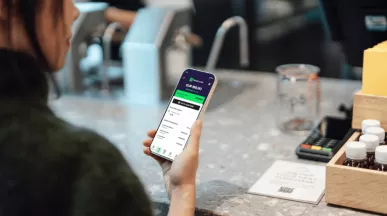
For cross-border employees, checking the available retailers before choosing this benefit can therefore be useful. The Pluxee app and merchant locator provide information about the acceptance network.
The tax treatment of gifts awarded to employees must also be assessed according to the circumstances in which they are granted.
Remote working and mobility: what rules apply to cross-border workers?
Flexible working arrangements can help cross-border employees organise their daily routines. However, remote working requires particular attention.
When employees work from their country of residence, specific tax and social security rules may apply.
Luxembourg's Joint Social Security Centre (Centre commun de la sécurité sociale, CCSS) explains the conditions of the European framework agreement on cross-border teleworking, including the relevant reporting procedures.
Social security rules should not be confused with taxation rules, which depend in particular on the agreements between Luxembourg and the employee's country of residence.
Before introducing a remote working policy, employers should therefore verify the requirements applicable to each employee's circumstances.
How can employers adapt benefits to cross-border workers' needs?
An employee benefit may appear attractive in theory but prove difficult to use in everyday life.
To develop a relevant benefits package, employers can consider three factors: employees' expressed needs, the practical conditions for using each benefit and the applicable legal obligations.
A short internal survey can help identify whether employees encounter difficulties using their benefits or would appreciate greater flexibility.
The objective is not necessarily to introduce different benefits for residents and cross-border workers. Instead, employers can focus on offering accessible, useful benefits based on transparent eligibility criteria.
In Luxembourg, where almost one in two employees commutes from another country, this approach helps employers respond to the diverse needs of their workforce while respecting the applicable legal framework.